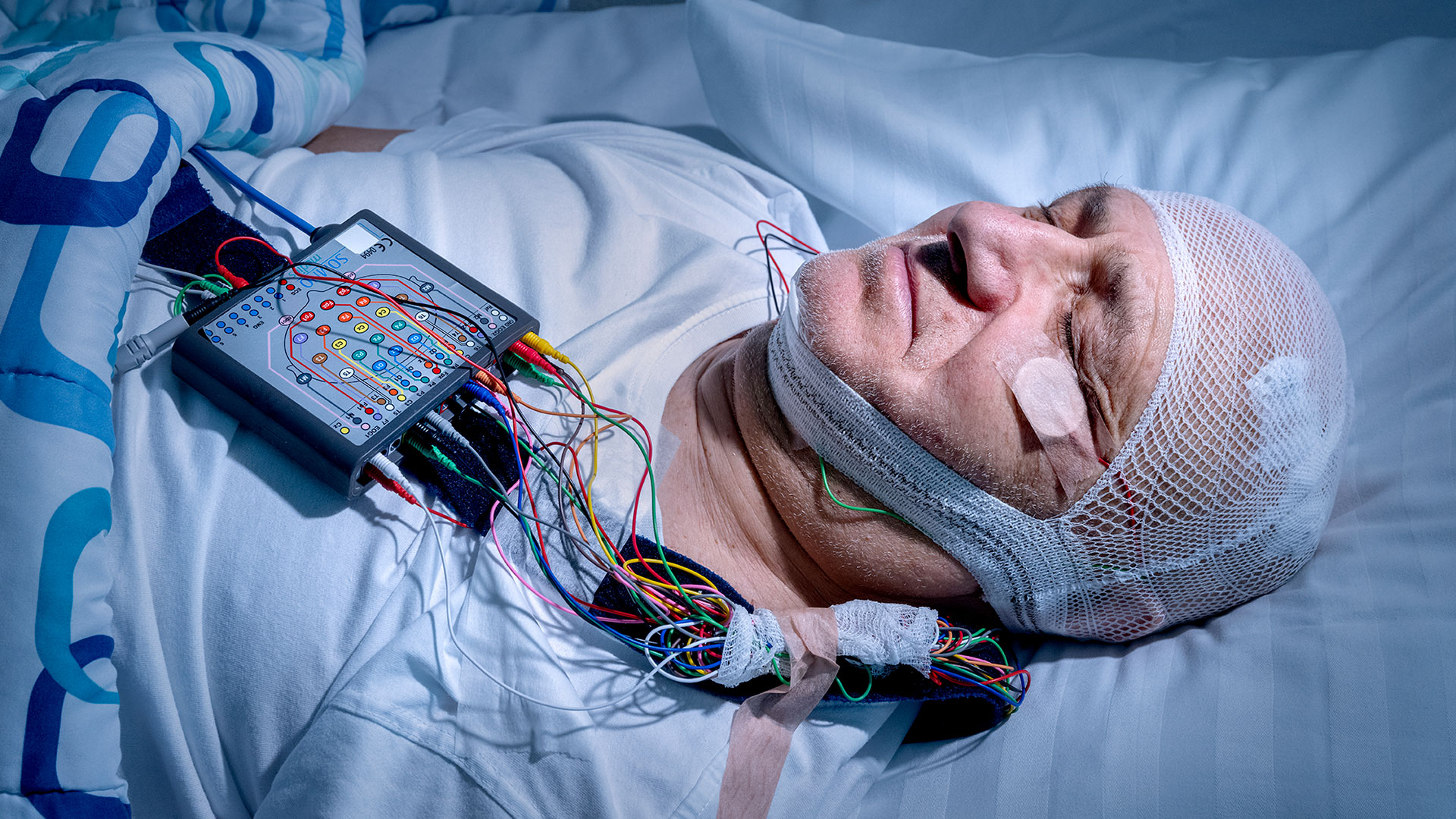
Artificial intelligence can identify patterns in sleep and detect correlations with diseases with a high degree of accuracy. Researchers from Stanford University, DTU, and international partners have developed a so-called self-learning AI model (see fact box) to analyze hundreds of thousands of hours of sleep measurements and identify patterns in signals from the brain, heart, muscles, and breathing.
The researchers use their model, SleepFM, to predict the risk of up to 130 diseases. The model has been trained on more than 585,000 hours of sleep measurements, known as polysomnography (PSG) (see fact box), from approximately 65,000 participants, making it one of the most comprehensive sleep models to date. The study “A multimodal sleep foundation model for disease prediction” has been published in the renowned journal Nature Medicine.
One of the researchers behind the study, Magnus Ruud Kjær, a PhD student at DTU Health Tech, hopes that the team behind the AI model will have the opportunity to test it in a hospital.
“When a sleep study is already being conducted - for example, to diagnose sleep apnea - AI could potentially be used to provide a broad assessment of disease risk without additional tests. It could identify patients who should be referred further within the healthcare system,” he says.
The researchers show that their model, with an accuracy of up to 85 percent, can predict diseases such as dementia, chronic kidney disease, atrial fibrillation, and heart attack. The researchers can validate their predictions by comparing SleepFM’s results with anonymized data on disease outcomes recorded among the participants. This is possible because the researchers have gained access to sleep records from the U.S. Sleep Heart Health Study and the Stanford Sleep Cohort, which contain data from several large hospital sleep clinics.
Sleep as a data stream
According to the study, sleep is a rich physiological data stream that can reveal a great deal about our overall health status, but which has not yet been fully utilized.
SleepFM represents a breakthrough in both sleep research and in systems for predicting future disease risk. Whereas previous AI models primarily focus on determining sleep stages, SleepFM expands the field by linking sleep patterns to broad disease risk. This new approach has the potential to change the way healthcare professionals currently screen for and monitor a wide range of chronic diseases.
Assistant Professor at DTU Health Tech and co-author Andreas Brink-Kjær is continuing to work on the project to better understand the body’s measurable signals - so-called biomarkers - that SleepFM identifies to predict diseases.